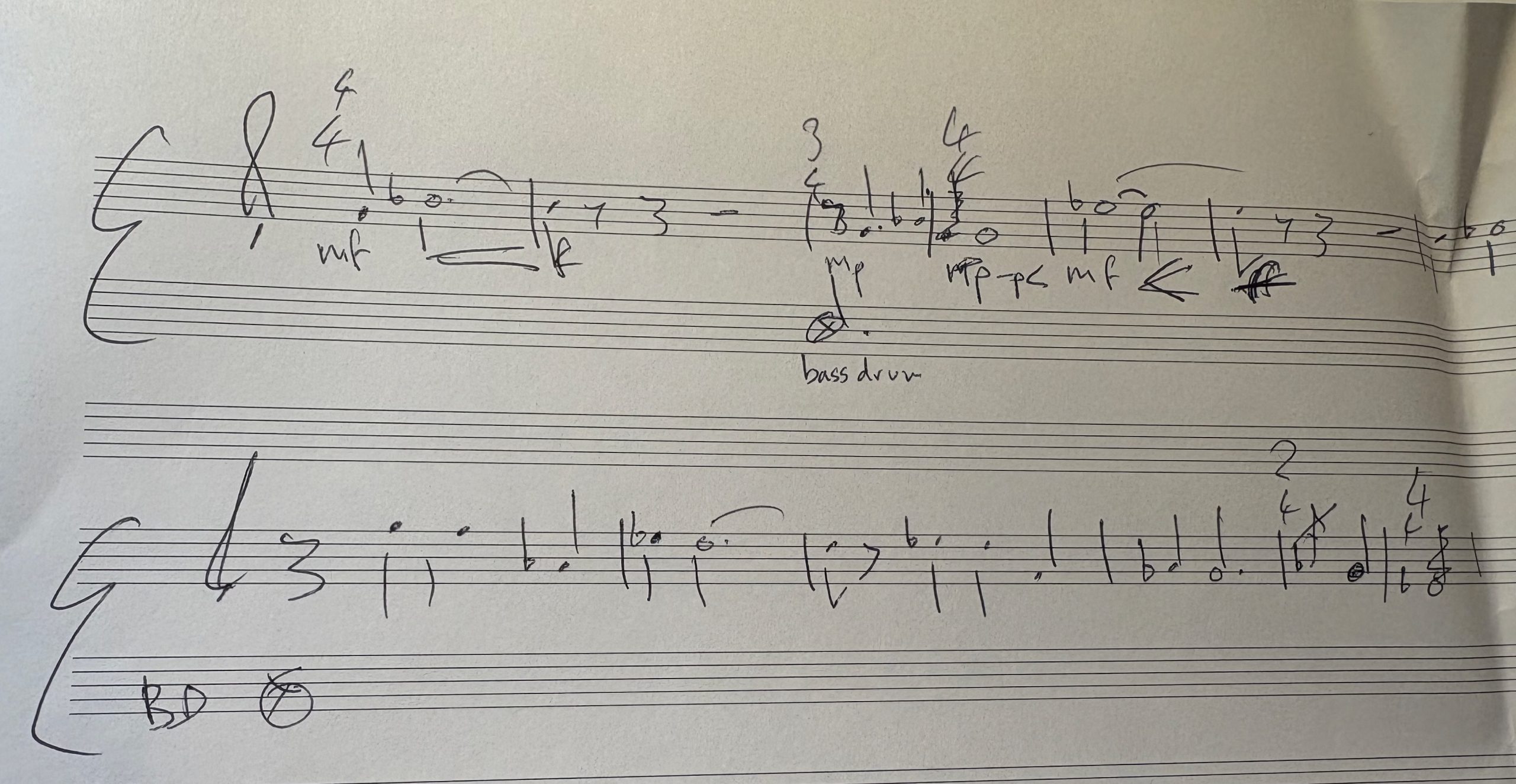
“I want to compose music that has emotional depth; music that allows space for people to be present, to hear, to consider, to feel.
Music has the ability to change the world. At any one moment in music you can find beauty, love, empathy, compassion, joy, healing, and hope. To my mind, there is nothing else in the world where you can find all of those things all at the same time.
As a musician I feel a sense of responsibility to engage with all of those qualities when I compose.”
Why I began composing
For as long as I can remember I have composed music. When I was young, I had no application or interest in practicing the Bach or Beethoven or Mozart that was on my piano’s music stand. I just didn’t enjoy practicing – but I very much loved the music. I loved the chords, I loved the lines, I loved the sense of journey – and, now looking back, I realize I loved that the measure of the journey is going on the journey itself, not whether you reach the end of the journey.
I would make up my own melodies to the chord sequences found in the music of those amazing composers, add notes to some of their harmonies, and experiment with the sound all of this made.
As I got a little older, moving into my teens, composing was maybe the only real way I had of not only expressing myself but also a place where I could be myself. It was a way of balancing my brain, and in all honesty music – and specifically composing music – probably saved me in many ways.
Composing music has been a constant in my life and, perhaps most importantly, it has always helped to keep me balanced.
I don’t know that I was ever really comfortable with that – in fact I know for sure I wasn’t. It took me well into my twenties to come close to understanding the importance that music and composing had in my life. But at the same time something even more important happened: I was able to begin articulating why I loved music.
This began an ever-continuing journey of increased awareness of what I believe the power of music to be and why it was so important to how I saw the world I live in – and maybe what my own place in it was and could be.
Why do I compose?
Over time, I started to understand that music has the ability to change the world. At any one moment in music you can find beauty, love, empathy, compassion, joy, healing, and hope. To my mind there is nothing else in the world where you can find all of those things at the same time. The world seemed to need more of all of them – and, as I write this in 2025 – perhaps it needs them now more than at any other point in my life.
Up until the time when I was beginning to understand the power of music, I don’t think I ever really knew why I composed – other than having an inexplicable compulsion to do so. As that understanding developed (as it still continues to do), I started to realize that what I composed had to be relevant to how I saw the world, where music fit in with our world, and how music could change a life – or lives – within this world.
I began composing music that made things that were, to me, intangible, tangible; music that challenged me as both a person and a composer, and hoped it would give those who experienced it the opportunity to find their own path into what I had composed.
What I want my music to be
I want to compose music that has emotional depth; music that allows space for people to be present, to hear, to consider, to feel. I want to compose music that speaks to how I feel personally and about what is happening in the world around us.
To do anything less would feel like I would be ignoring everything I have been fortunate enough to have learned, and continue to learn, about music and how it interacts with the world. For me, to do anything less would be dishonest and would lack integrity. Essentially, it would mean I wasn’t telling the truth. To do anything less would be for me to be dishonest – which is antithetical to what I want to do: to harness the amazing beauty, love, humanity, empathy, compassion, joy, healing, and hope that we find in music.
When I compose I feel a sense of responsibility to engage with all of those qualities.
What this means to the music on the page
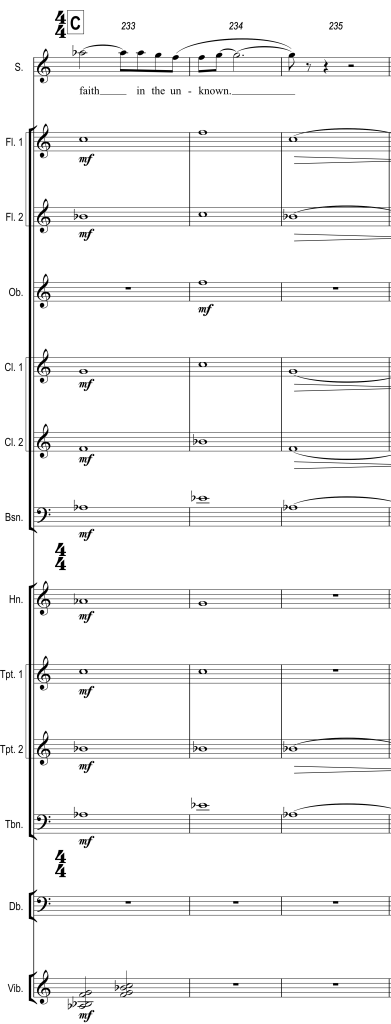
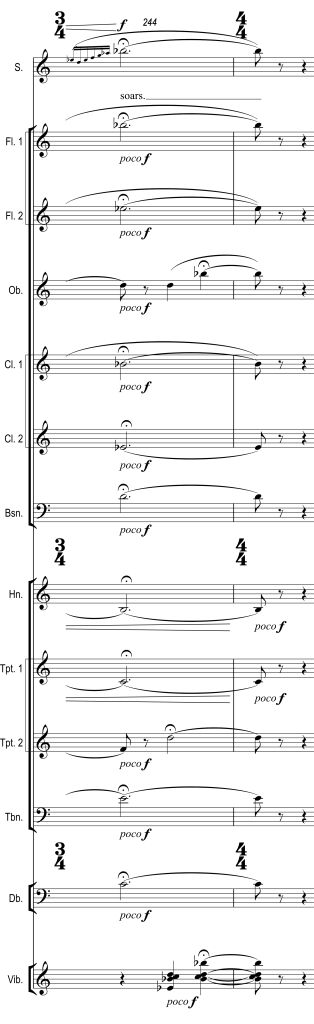
It is important to me that composing isn’t just a personal – almost selfish – endeavour. If you are want to say something about humanity, it stands to reason that what you put on the page has to be music that could be interpreted by people through their own unique view of the world: I want to try and leave plenty of space to allow musicians to be themselves.
Over time I have developed a process at the end of each new work. I go through the score page by page and ask myself this question: Is there a way that a reasonable person could reasonably interpret this page in a way I wouldn’t like? If the answer is “yes”, I make changes to the page. If the answer is “no” I move on to the next page until I reach the end of the score.
This means that not only is the black ink on the page my choice, but so is the white space. In the end, if what I value most is the humanity in music, then how can that exist without leaving the space for performers to tell their truth, too? The black on the page is mine, and the white is purposely given to the conductors and performers to fill with their own hearts and minds.